Top Residential Design Trends Shaping Ahmedabad Homes 2026
15-04-2026
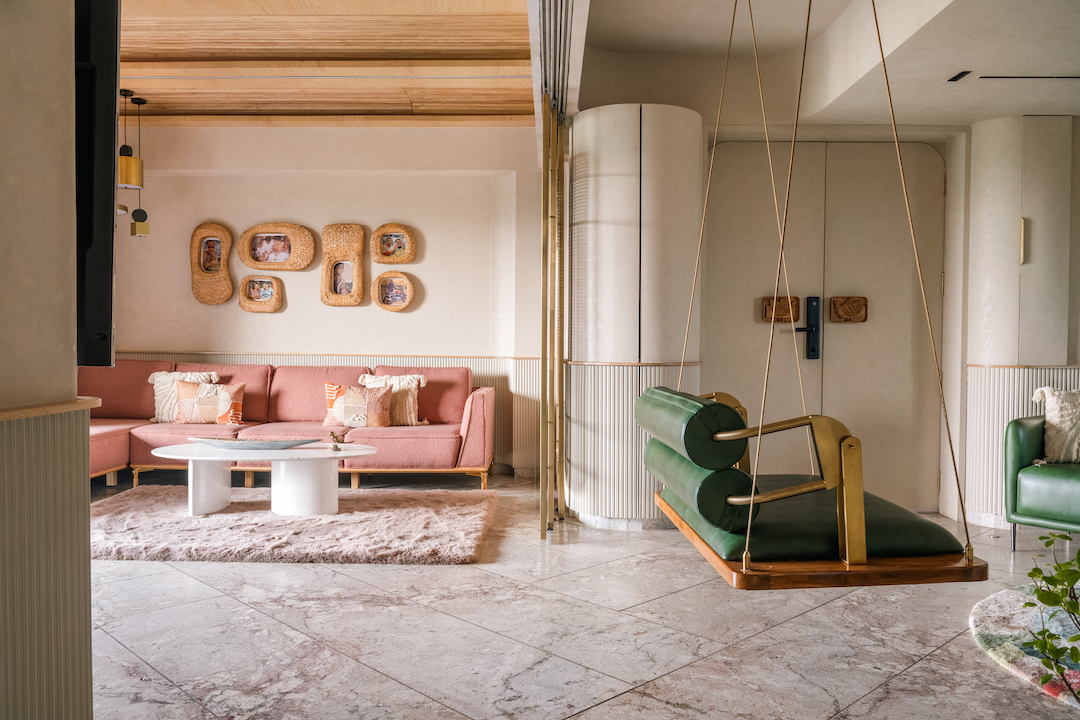
There's a certain kind of conversation that happens on a construction site that never quite makes it into award submissions or magazine features. The one where a client walks through a half-finished space, looks up at a double-height ceiling flooding with afternoon light, and goes quiet for a moment. Then they say, “This is exactly it. This is what I couldn't describe.”
That moment is what we're designing toward. Not trends for trend's sake — but spaces that feel inevitable. Spaces that could only exist in Ahmedabad, for this family, at this point. After completing several residential projects across the city, here is what we're actually seeing on site.
The Front Door Is Becoming a Manifesto
Walk up to any home Architects At Work have designed recently, and you'll notice that the entrance is no longer just a threshold. It's a statement of intent — sometimes literally.
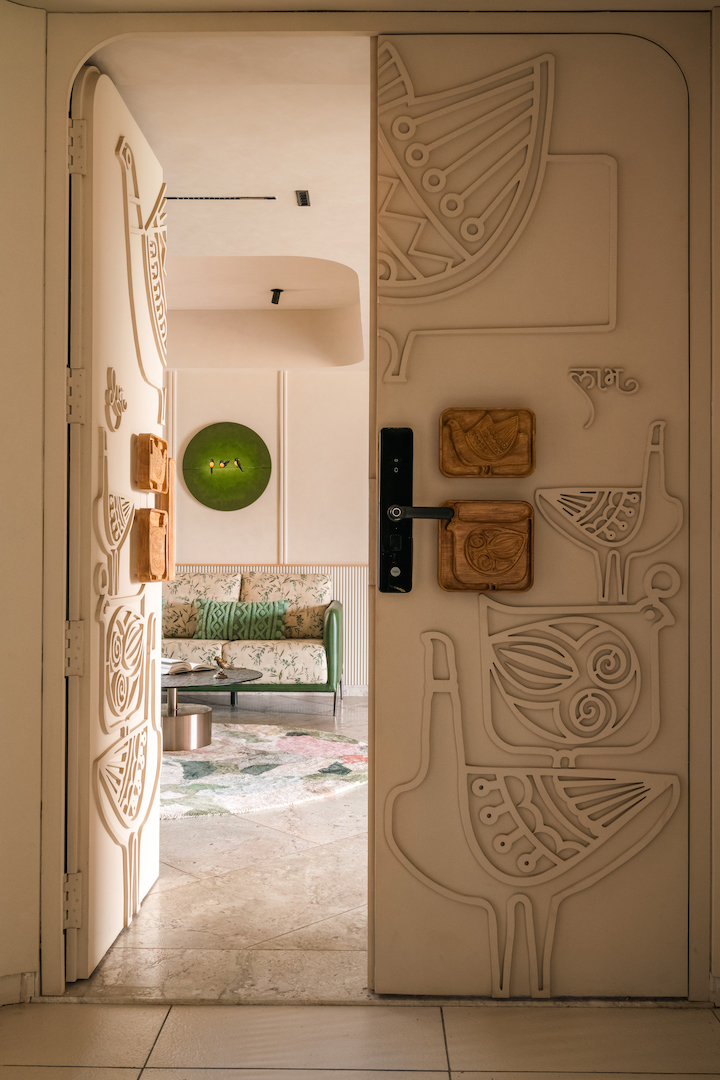
On one of our apartment projects, the main door became a full-height canvas of hand-sculpted folk-art relief work. The carvings aren't decorative in the conventional sense — they're narrative. Visitors stand in front of that door and read it before they enter. They arrive already knowing something about the family inside.
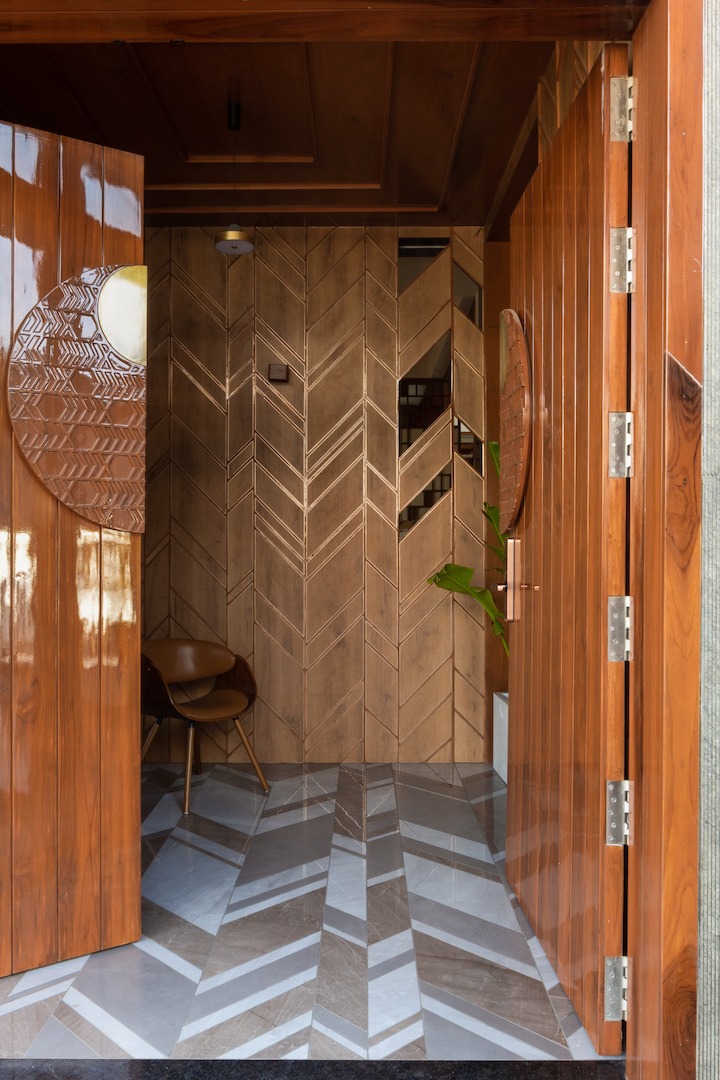
On another bungalow project, we worked with teak pivot doors flanked by a double-height chevron-patterned feature wall — the same chevron geometry continuing into the foyer floor tiles, creating a layered threshold experience that unfolds as you step in. The joinery is traditional, the composition is contemporary, and the result is something that feels both rooted and entirely of the moment.
Art-Integrated Architecture: When the Wall Is the Art
There's a difference between hanging art on a wall and making the wall itself the art. We've been exploring that difference across several projects, and the results have been some of the most resonant spaces we've produced.
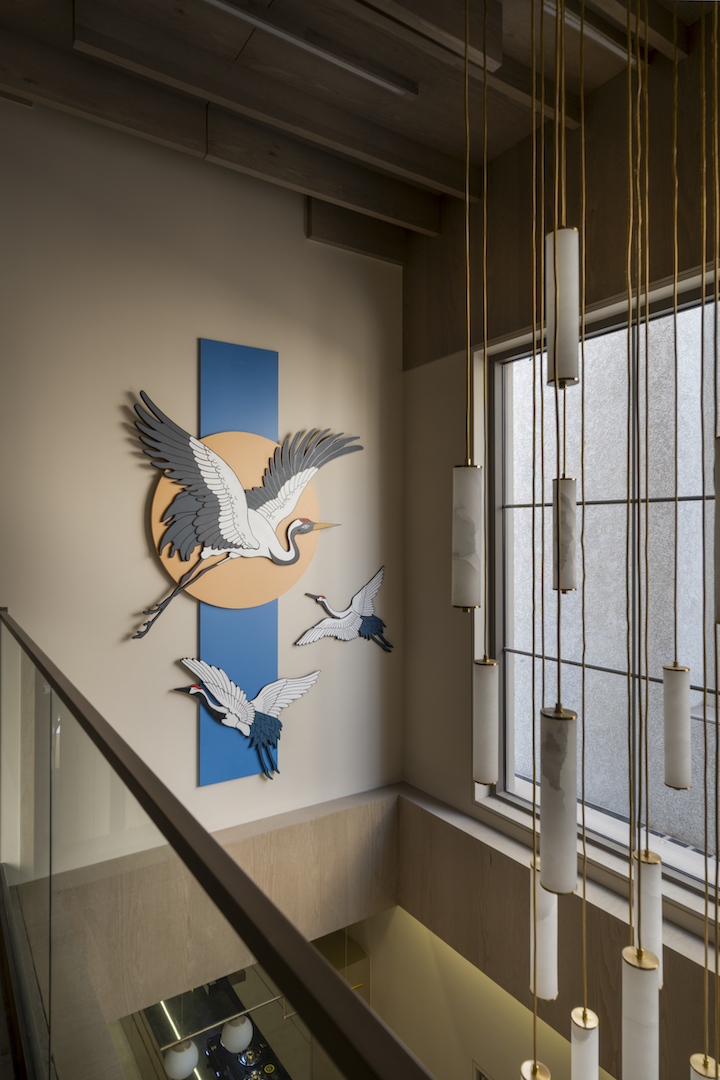
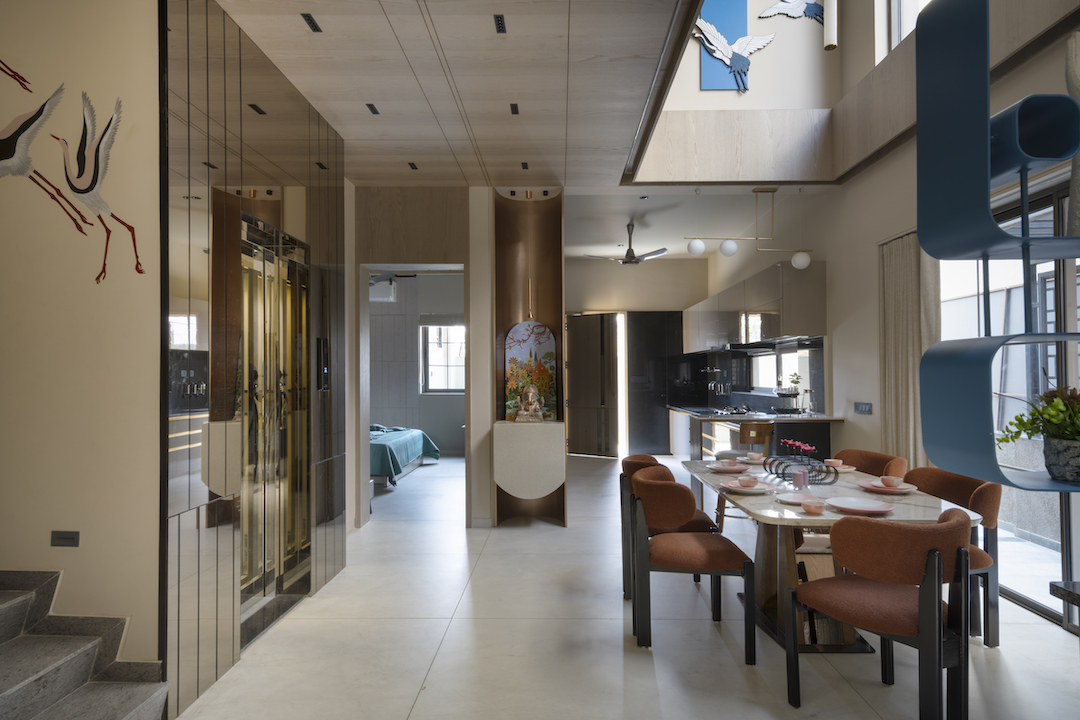
In a multi-storey family home, Architects At Work designed a large-scale crane installation that begins at the entry wall, rises through the staircase void, and finds its resolution on the ceiling of the upper landing — three cranes in flight, crossing between floors, turning movement through the house into a visual journey. A cascade of slim brass pendants drops through the full height of the void, catching the light from a diffused glass window.
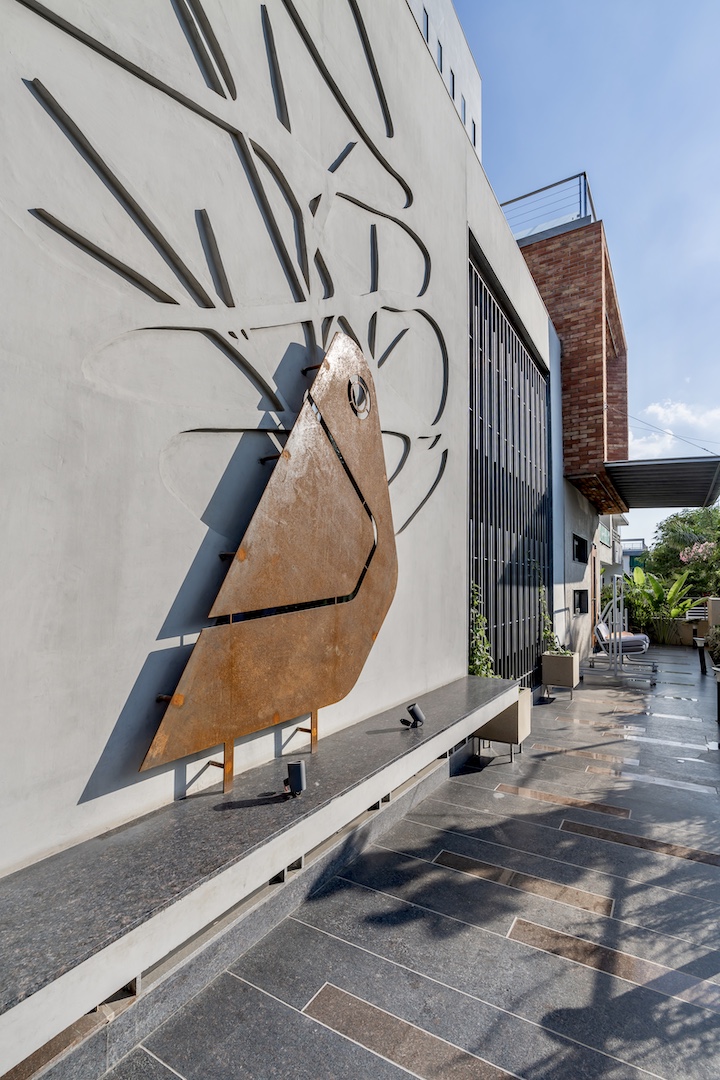
On another project, the façade itself became the artistic statement: a large-scale monstera leaf motif in cut plaster and Corten steel, mounted on the street-facing wall. At dusk, when the uplighting catches the sculpture and the planting comes alive, the house reads as a single integrated composition rather than a building with decoration attached to it.
The Double-Height Living Volume Has Arrived — And It's Working
For years, double-height spaces in Ahmedabad homes were aspirational in the brief and then quietly negotiated away at the cost estimate stage. That's changing. We're now completing homes where the double-height is non-negotiable, and seeing exactly why clients held firm.
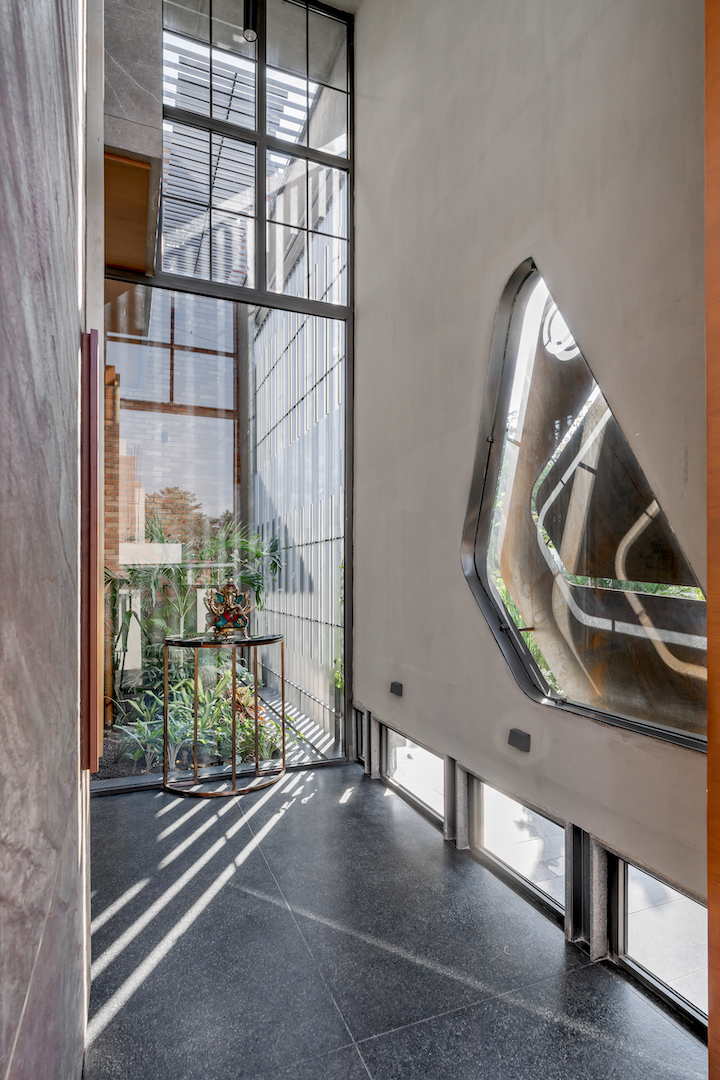
In one of our bungalow projects, the central living zone opens to a double-height volume with a skylight and an internal green wall visible through full-height glazing on the rear facade. The floating staircase runs alongside this green pocket — so every time a family member moves between floors, they're moving through light and greenery. The space breathes in a way that no single-height room ever could.
Craft at the Scale of the Room
The handmade has always been part of Gujarati domestic culture. What's shifted in 2026 is the scale and confidence at which craft is being deployed — not as a single decorative accent, but as the dominant material language of an entire room.
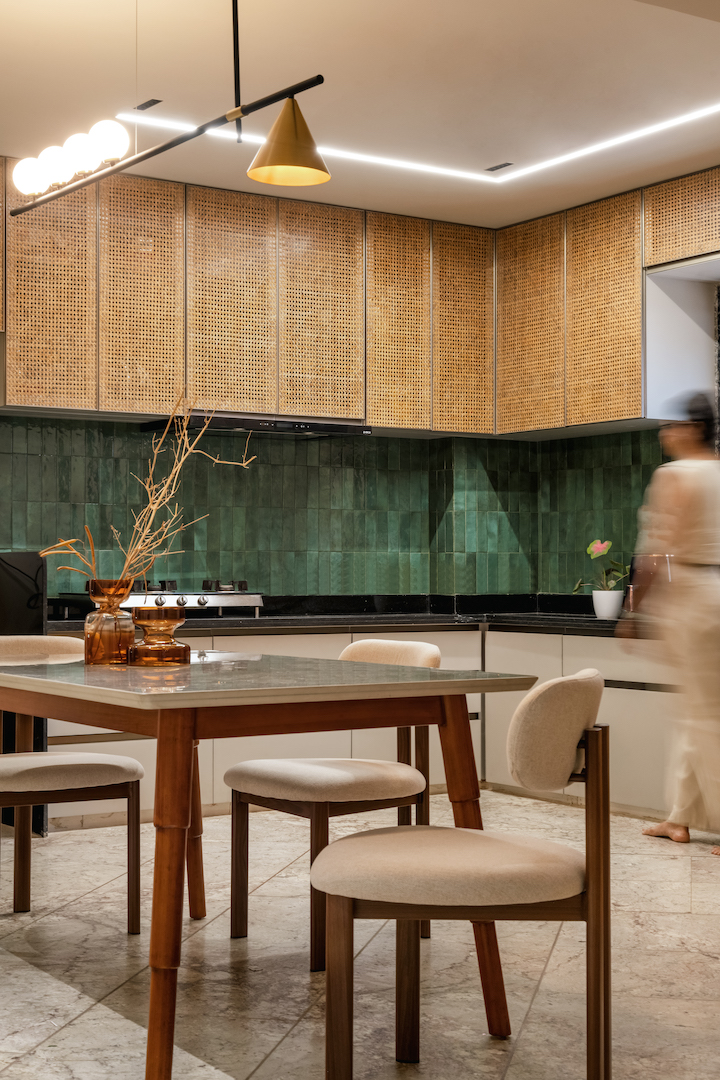
Look at a kitchen we recently completed: the upper cabinets are entirely fronted in hand-woven cane mesh, the backsplash is deep forest-green zellige tile — slightly irregular, slightly imperfect, each piece catching light differently. This is a kitchen that rewards close looking. The more time you spend in it, the more you notice.
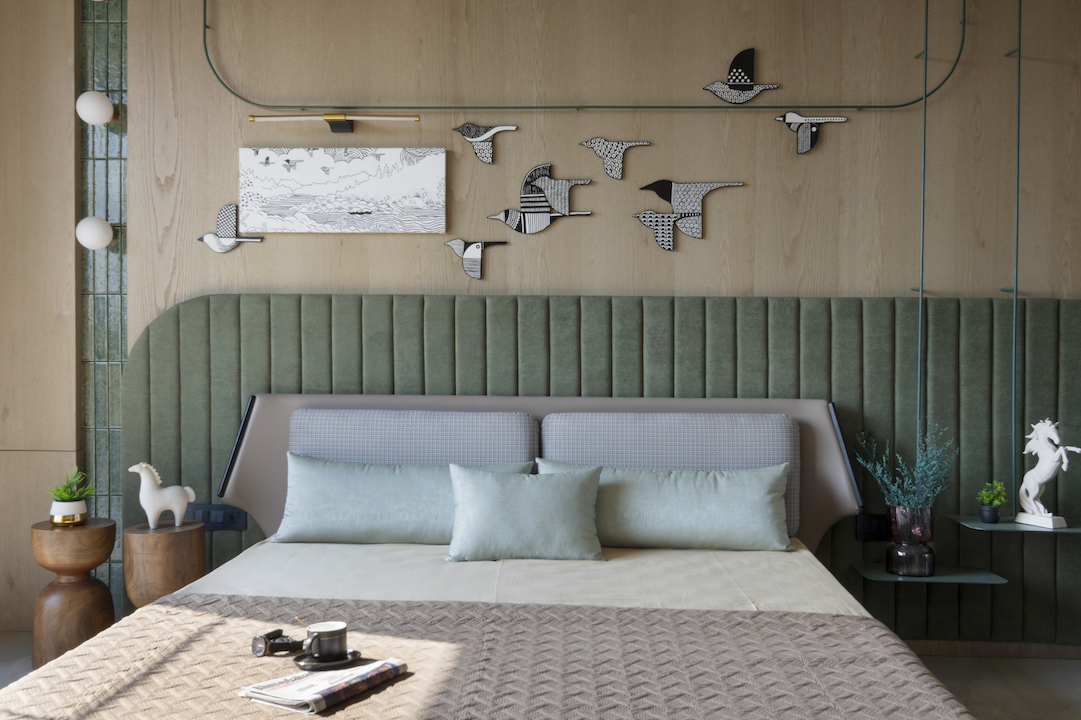
In bedrooms, craft enters through the headboard: a full-width channel-tufted upholstered panel in sage velvet that runs to ceiling height, with folk-art bird sculptures mounted across the wood-panelled upper section — each bird hand-painted, each one slightly different. The wall tells a story that a standard headboard wall simply cannot.
Colour With Conviction
Ahmedabad homes have been very careful with colour for the past decade — careful in ways that often tip into timid. What we're seeing in 2026 is a breaking of that pattern, and it's happening with real conviction rather than as a trend indulgence.
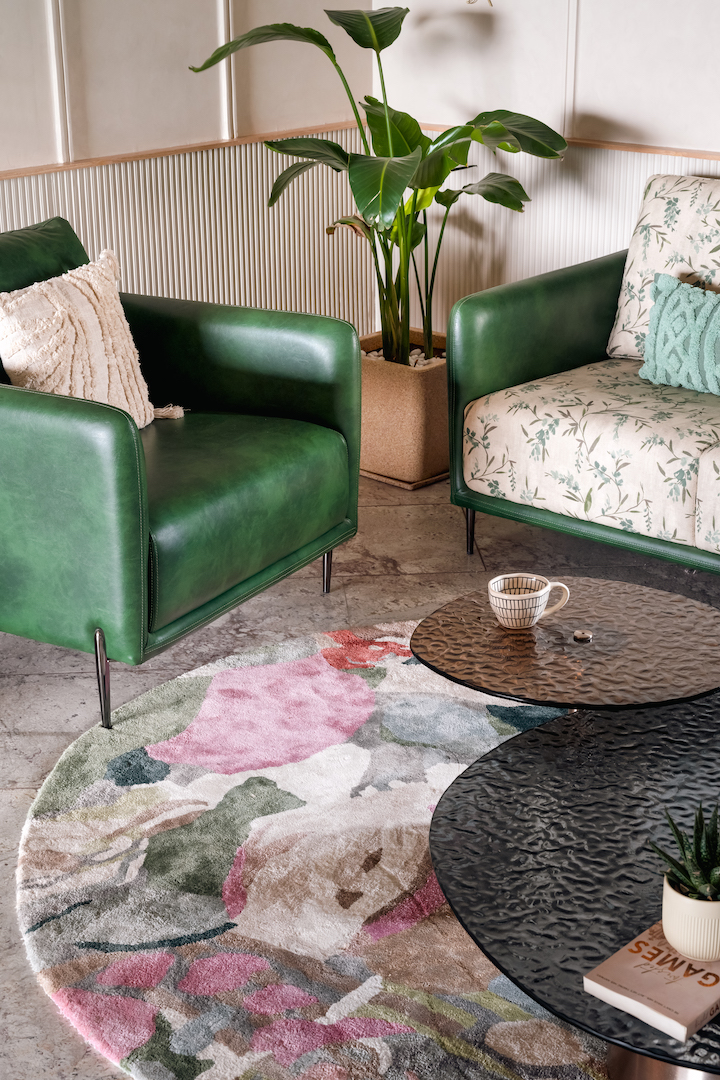
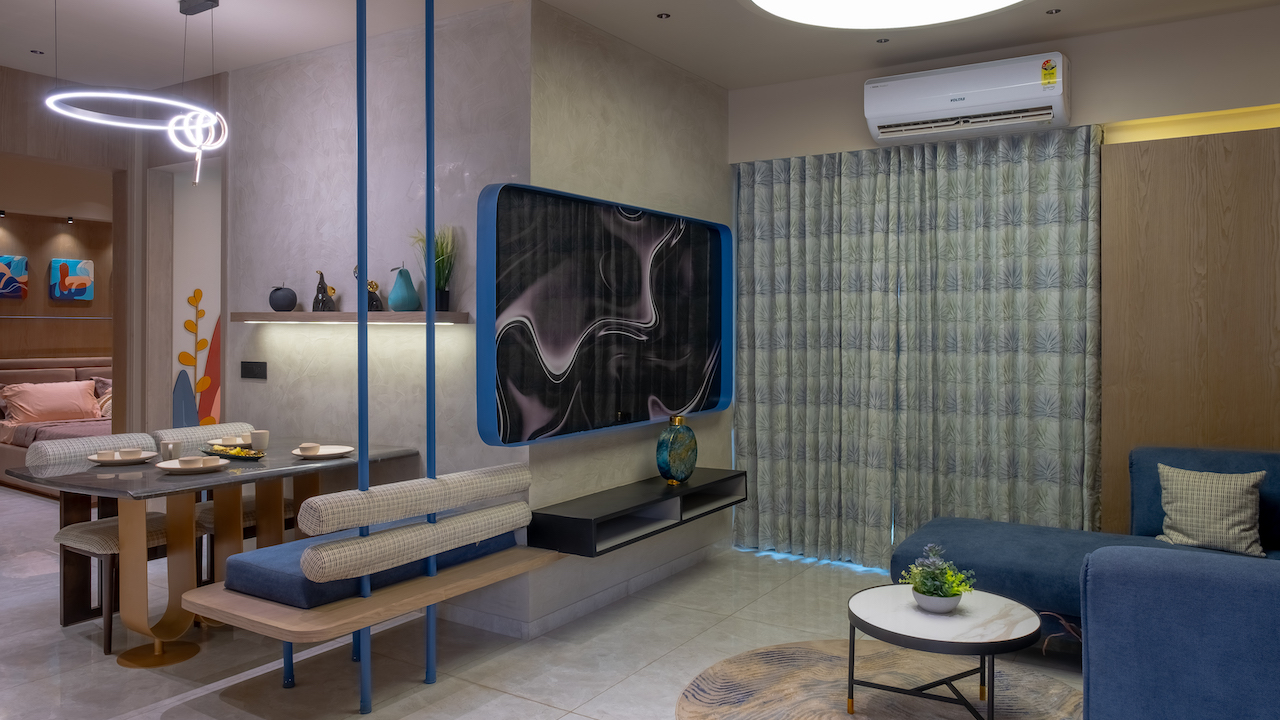
In one flat we completed, deep forest green leather armchairs paired with a hand-tufted floral rug in pinks, greens, and blush — against fluted off-white wall panelling — was a deliberate departure from safe neutrals. The green doesn't try to blend in. And in another project, the blue-metal frame system running through the apartment works as a colour accent at architectural scale rather than at the furnishing scale.
The Facade as a Living Thing
Step outside some of the most interesting residential projects being completed in Ahmedabad right now, and you'll notice that the boundary between building and landscape has become genuinely porous.
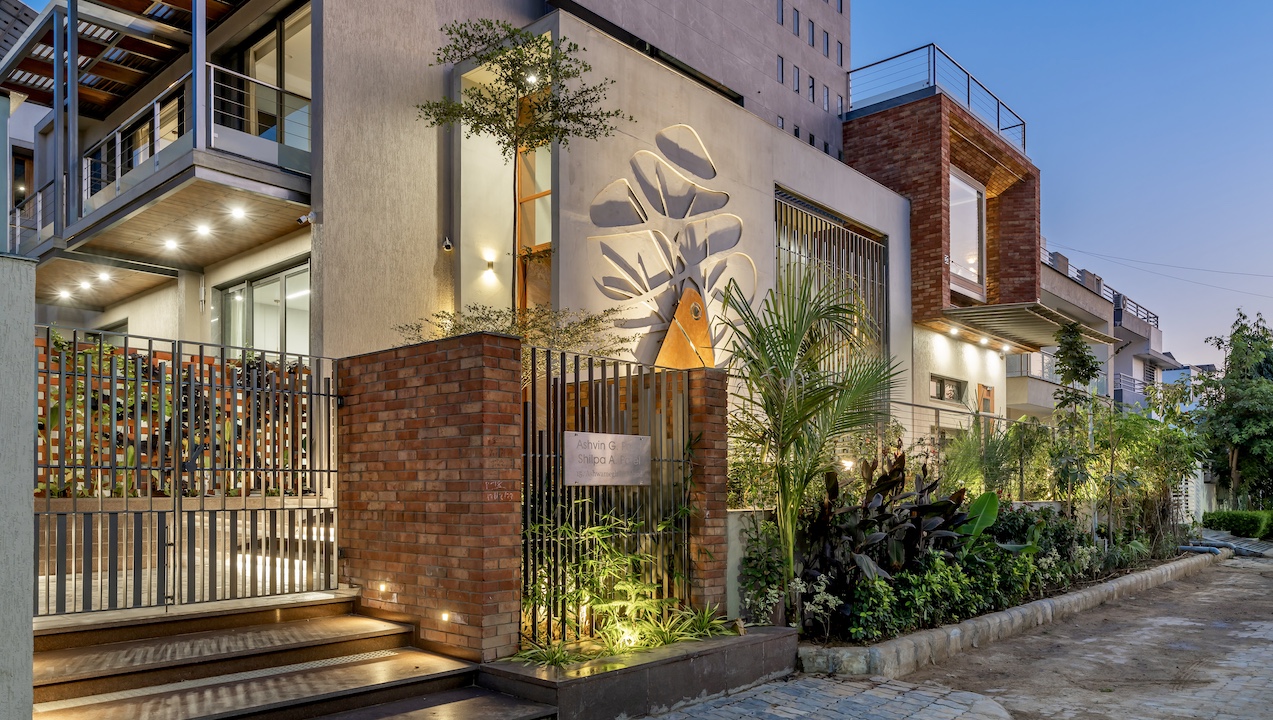
On a four-storey family residence, every floor has a deep terrace planted with palms, ferns, and flowering plants — so the building reads from the street less as a concrete structure and more as a vertical garden punctuated by glass and timber louvres. During the monsoon, it is extraordinary.
On another project, the facade treatment goes further — an abstract line-art composition incised into the plaster, with a large Corten steel bird sculpture at ground level. The artwork and the architecture are indistinguishable.
Bringing the Garden Inside — Literally
The internal green wall — a planted volume inside the building envelope, visible through glazing, sometimes open to the sky — is one of the design moves we're most excited about right now. Because when it works, it works spectacularly.
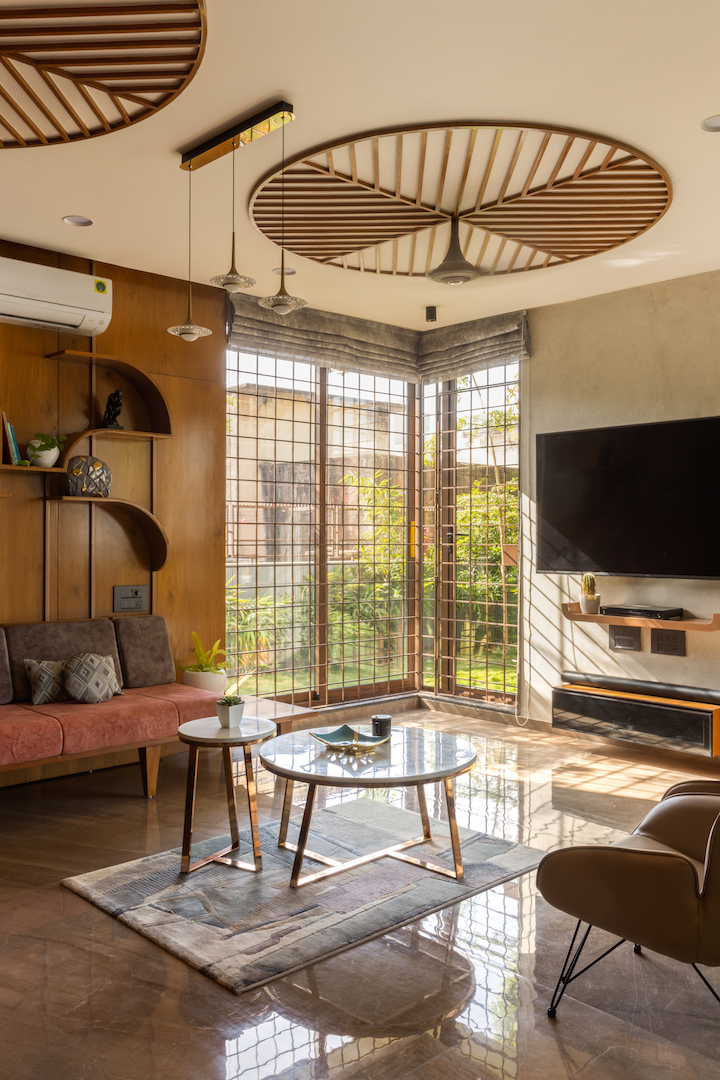
In one bungalow, a contained garden sits behind full-height steel-framed glazing at the rear of the living room. The primary view from the sofa isn't a wall or a television, but a planted composition that changes through the day as the sun moves across it. People sit down and exhale.
Children's Rooms That Take Young Inhabitants Seriously
The tendency, still, is to do something "fun" and "colourful" and safe. Primary colours, cartoon motifs, furniture from a catalogue. The child grows out of it in three years, and the whole thing gets redone.
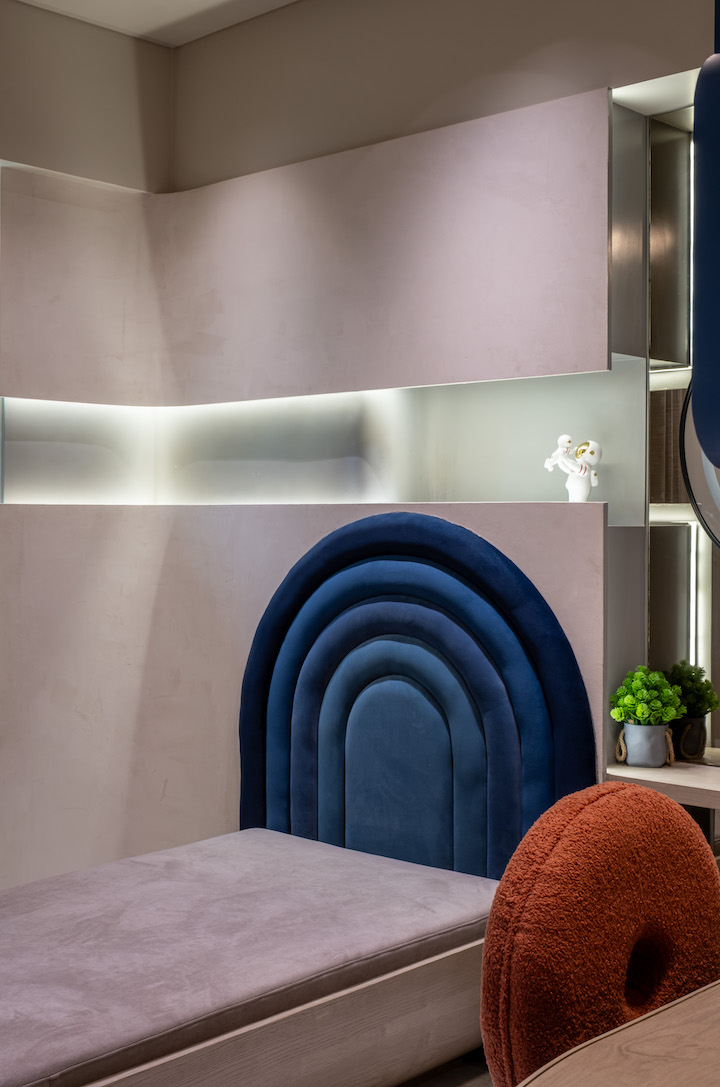
On a recent project, we built a children's room around a deeply upholstered navy arch headboard — concentric arcs of velvet that read somewhere between a rainbow and a portal — set against a mauve microcement wall with a back-lit mirrored niche shelf. The room is calm, slightly otherworldly, and completely specific to this child. It's a room that grows with the child rather than waiting to be outgrown.
Warm, Layered Minimalism
We want to be precise about something, because "minimal" is one of the most misused words in residential design briefs. What most clients mean is: not cluttered, not fussy, not overwhelming. They don't mean a cold white box with no visual interest.
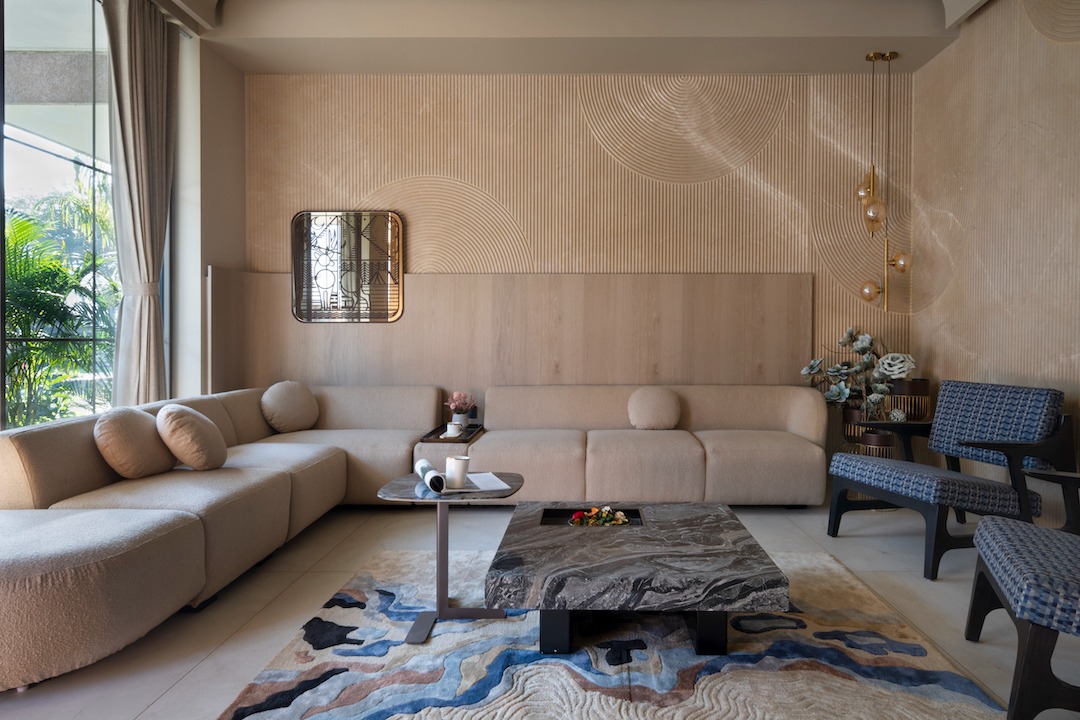
Our warmest, most livable example of this is a living room with a sand-and-cream palette throughout — a bouclé sofa, natural wood panelled walls — but with a full-width textured feature wall of concentric arc relief, a statement Levanto marble coffee table with dramatic veining, and a pair of blue woven armchairs that anchor the composition without fracturing its calm. Every element earns its place. Nothing is superfluous. But the room is richly layered.
Narrative Homes: When Every Room Has a Thread
The most holistic residential projects we've completed share something difficult to articulate but immediately felt: a single narrative thread that runs through every space.
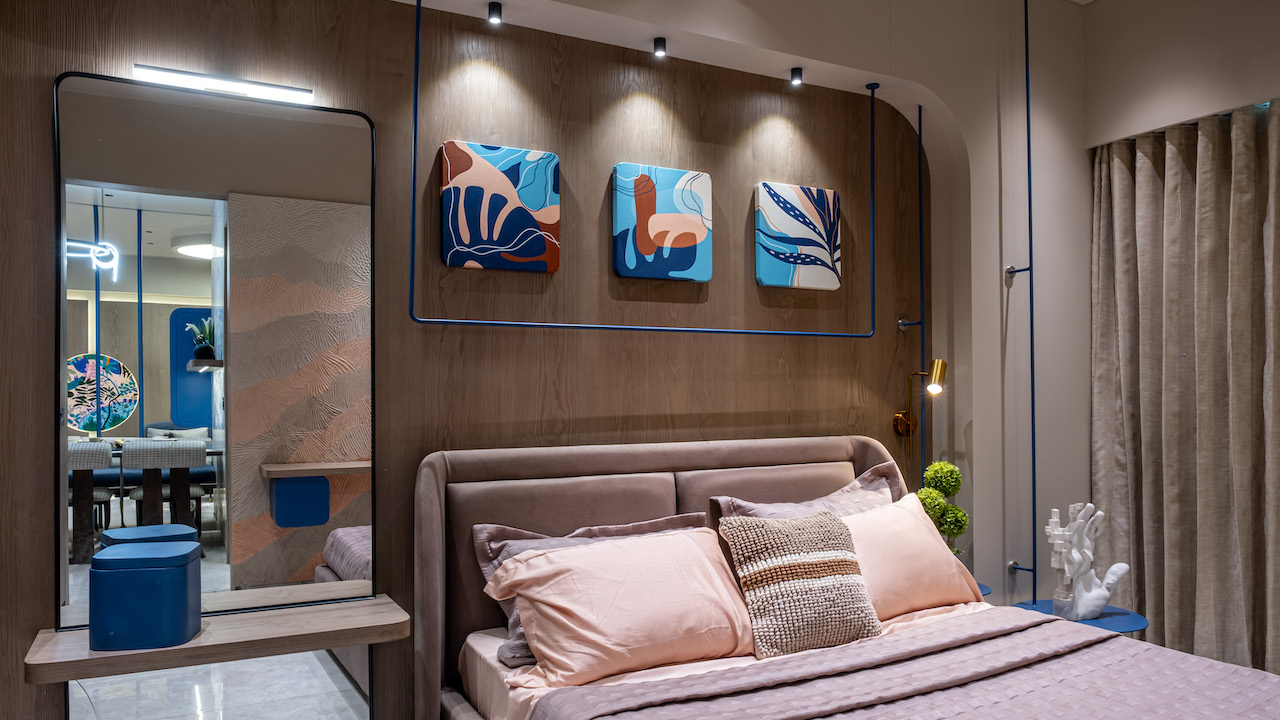
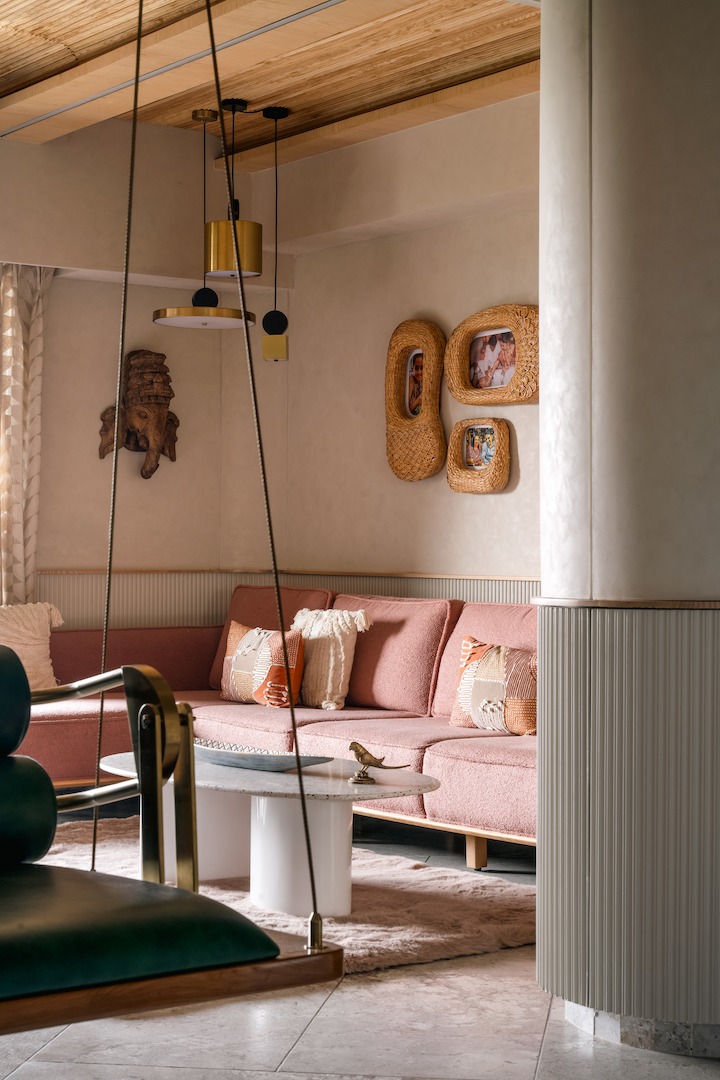
In the folk-art apartment, the language of the carved entry door — those abstract birds, vessels, and geometric animals — reappears in the wooden wall art, in the hand-woven picture frames, in the brass bird on the coffee table. The home has a visual dialect that is internally consistent and deeply personal.
This is what separates a well-designed home from a well-specified home. The finishes can all be excellent, the furniture can all be good quality, and the spaces can still feel like a collection rather than a composition.
A Note on What's Driving All of This
Ahmedabad homeowners in 2026 are more design-literate than they've ever been. They've travelled, they've read, they've followed architects and designers they admire. But they're also — increasingly — more interested in their own culture, their own city, their own materials and craft traditions as a source of design inspiration.
That combination is genuinely exciting to work with. It means clients who can articulate what they want, but who are also open to being surprised by what the design process discovers. It means briefs that are ambitious without being prescriptive. It means buildings that are specific to Ahmedabad without being nostalgic about it.
The city is producing some of the most interesting residential architecture in India right now. Architects At Work feel that in the projects we're completing and in the conversations we're having about what comes next.
